Stuff. Blogger tarafından desteklenmektedir.
Shoulder etiketine sahip kayıtlar gösteriliyor. Tüm kayıtları göster
0
Seated Machine Shoulder Press |
Step 1

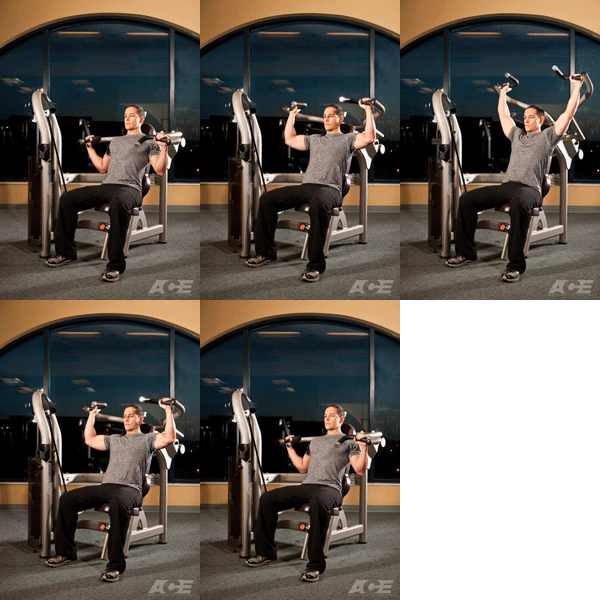
Starting Position: Sit with your back firmly supported against the backrest. Adjust the seat height so that the handles are level with your shoulders or just higher than your shoulders. Grasp the handles firmly with the thumbs clasped around the handles. Keep the wrist in line with your forearms. Position your elbows in the 4 and 8 o'clock position with the elbows aligned with the midline of your trunk. Position your feet firmly on the floor or on the footrests and brace your abdominal muscles to stabilize your body and spine. Do not press your low back into the backrest. Maintain the natural curve in your low back and avoid arching your back throughout the exercise. Pull your shoulder blades back and down. Keep these engagements throughout the exercise.

Step 2

Gently exhale and slowly press up, straightening your elbows; keeping the wrists in neutral position and head aligned with your spine. Do not allow the low back to arch.

Step 3

Continue pressing until your elbows are fully straight, but not locked. Pause briefly. Engage the muscles of your back to pull the handles back down towards your starting position. The elbows should bend in a slow, controlled manner while returning to their starting 4 and 8 o'clock position. Repeat the movement.

Step 4

Exercise Variation: To increase the exercise intensity, perform the following variations:
(a) Perform unilateral (one arm at a time) presses
(b) Sit upright off the backrest, which will require a greater effort from your core to stabilize your trunk as you perform the press movement.


In the overhead position, the shoulder is relatively unstable. To protect your shoulder it is important to engage your lats (back muscles) to initiate the downward movement as opposed to simply yielding to gravity. This will help stabilize your shoulder.
readmore »
0
Seated Barbell Shoulder Press |

Step 1

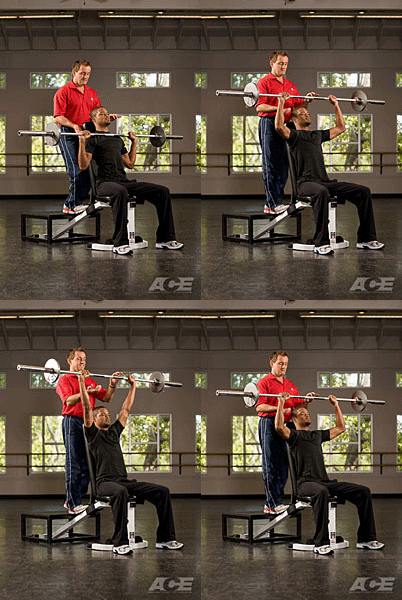
Starting Position: Sit with your back against a backrest so that your head, shoulders and butt make contact with the pad and your feet are firmly on the floor. The bar should be positioned close to your body and level with the upper part of your chest or collarbone. Grasp the bar with the palms facing forward, thumbs wrapped around the bar. Your grip should be slightly wider than shoulder-width or at a width where your forearms are vertical to the floor. Brace your torso by contracting your core and abdominal muscles. If working with a spotter, signal for assistance.

Step 2

Upward Phase: Pull your shoulder blades down and back and hold this position throughout the exercise. If working with a spotter, have them assist you by unracking the bar from the supports. Exhale and press the bar overhead until your elbows are straight. Do not allow your low back to arch. Keep the wrists in neutral position. Do not allow bending at the wrists.

Step 3

Downward Phase: Inhale. In a slow and controlled manner, bend your elbows and lower the bar. Keep your torso rigid, wrists neutral, back in contact with the bench and feet firmly planted on the floor. Mindfully contract the muscles of your back and arms to bring the bar down. Resist yielding to gravity. Be conscious of your head position. Do not allow the bar to come in contact with your face. At the end of your set, signal your spotter for assistance in racking the bar.
Spotting is important to ensure safety in this exercise. The spotter should stand behind you in a split-stance position, positioning themselves with an elevated advantage to assist. The spotter should use an alternating grip with their hands positioned inside of yours near the bar at all times throughout the exercise.

readmore »
0
Stability Ball Shoulder (Glute) Bridge |

Step 1

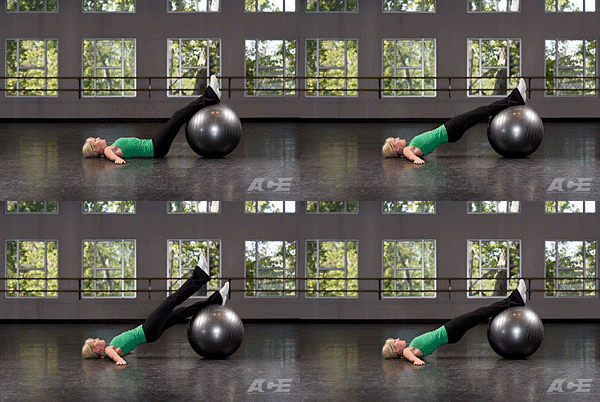
Starting Position: Lie on your back on a mat, placing the backs of your lower legs and heels on the top of a stability ball. Place your feet a few inches apart on the ball with your ankles slightly flexed. Gently use your abdominal/core muscles to press your low back into the floor. Attempt to maintain this gentle muscle contraction throughout the exercise. Your arms are out to your sides with the palms turned down to the floor to help stabilize your body during the exercise.

Step 2

Upward Phase: Gently exhale. Keep the abdominals engaged and lift your hips up off the floor. The backs of your lower legs and heels are pressing into the ball to assist the movement and provide additional stability. Press up until your torso and legs form a straight line with each other. Avoid pushing your hips so high that your low back begins to arch. Maintaining your abdominal contraction helps prevent excessive arching in your low back.

Step 3

Lowering Phase: Inhale and slowly lower yourself back towards your starting position.

Step 4

Exercise Variation (1): To further increase the balance challenge, move your feet closer together on the stability ball.

Step 5

Exercise Variation (2): To further increase the balance challenge, move your arms closer to your side or place them on your chest to reduce the stabilizing points of contact on the floor.

Step 6

Exercise Variation (3): To further increase the balance challenge, raise one leg off the ball toward the ceiling. Do not arch your lower back as you press your hips upward, which normally occurs when your hips are pressed up too far. Contracting your abdominal muscles prior to lifting, and keeping them engaged throughout the lift, helps prevent arching.
readmore »