Stuff. Blogger tarafından desteklenmektedir.
0
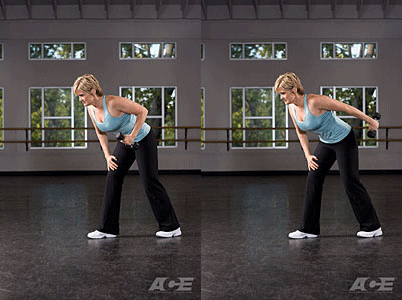
Dumbbell Triceps Kickback |

Step 1

Starting Position: Hold a dumbbell in your left hand. Stand in a split-stance position with your right leg forward. Keep your weight evenly distributed through the heels of both feet. Brace your abdominal and core muscles to stabilize the spine. Place your right hand on your right thigh. Slowly lean forward, shifting most of your upper extremity body weight into the right side. Pull your shoulder blades down and back. Your head should be aligned with your spine. Maintain these engagements throughout the exercise.

Step 2

Bend your left elbow bringing your left upper arm parallel to, and close to, your torso. Your forearm should hang vertical to the floor.

Step 3

Upward Phase: Exhale and slowly straighten your elbow. Your upper arm should remain stationary next to your torso. Do not allow the upper arm to rise during the movement. Do not allow the low back to sag or your torso to rotate.

Step 4

Downward Phase: Inhale and slowly bend your elbow, returning your arm to starting position. Do not allow your torso to change position. Keep your upper arm parallel and close to your torso.
readmore »
0
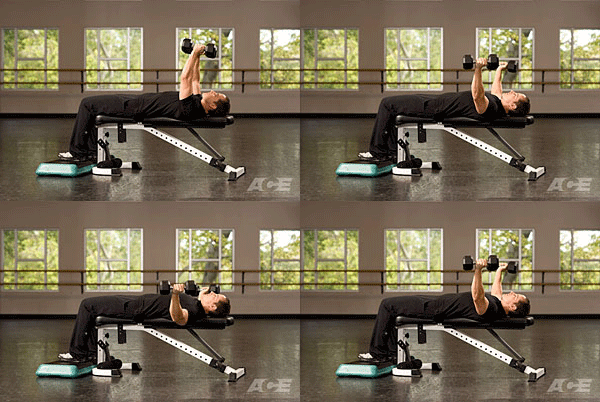
Lying Dumbbell Pec Fly |

Step 1

Starting Position: Holding a dumbbell in each hand, lie on your back on a flatbench with your feet placed firmly on the floor or on a raised platform so that you can keep your spine in a neutral to flat position. If working with a spotter, signal the spotter for assistance in handing you the dumbbells.

Step 2

Pull your shoulder blades down and back so that they make firm contact with the bench. Your head, shoulders, and butt should make contact with the bench and your and feet should make contact floor throughout the exercise. Signal the spotter for assistance in moving to the starting position. Grasp each dumbbell with palms facing forward and thumbs wrapped around the handle. Press the dumbbells to a position shoulder-width apart with your elbows straight. Turn your arms so that your palms face inward, with a slight bend in the elbows. Keep the wrist in neutral position. Do not bend at the wrist joint.

Step 3

Downward Phase: Inhale and slowly lower the dumbbells in a wide arc until they are level with your shoulders or chest. Keep the dumbbells parallel with each other during the movement. Keep your elbows slightly bent, and wrists in neutral position. Maintain all points of contact with the bench and keep your feet firmly on the floor/riser throughout the exercise.


Step 4

Upward Phase: Exhale and slowly return the dumbbells toward the ceiling in the same wide arc pattern of the downward phase Keep your elbows slightly bent, and wrists in neutral position. Maintain all points of contact with the bench and keep your feet firmly on the floor/riser throughout the exercise.
Safety is very important in this exercise. A spotter should adopt a split-stance position or half-kneeling position with the hands positioned as close to the most distal (wrist) joint. Keep the hands near, but not touching the wrists unless needed.

readmore »
0
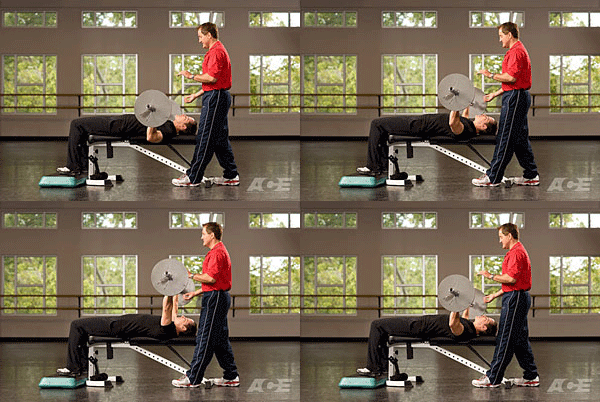
Barbell Bench Press |

Step 1

Starting Position: Lie on your back on a flat bench or raised platform with your feet firmly on the ground, your spine in neutral position. Position yourself on the bench so the bar is directly over your eyes. Pull your shoulder blades down and back so that they make firm contact with thebench. Your head, shoulders, and butt should make contact with the benchand your and feet should make contact floor throughout the exercise. Grasp the bar with your palms facing forward and your thumbs wrapped around the barbell.

Step 2

Signal your spotter for assistance in moving the bar to your starting position. Once the bar is unracked, position the bar over your chin or upper chest with your elbows straight. Keep your wrists in a neutral position.

Step 3

Downward Phase: Inhale. In a slow and controlled manner, lower thebarbell to lightly touch the middle of your chest - just below the armpits. The wrists should remain in neutral and your forearms vertical to the floor. Do not allow the back to arch away from the bench. Maintain all points of contact with the bench and keep your feet firmly on the floor/riser throughout the exercise. Performing the exercise with the elbows close to your sides emphasizes more triceps. Performing the exercise with the elbows flared out from the body emphasizes more pectorals.

Step 4

Upward Phase: Exhale and gently press the bar up to straighten the elbows taking the bar to the original starting position with the bar positioned over your chin or upper chest. Do not allow the back to arch away from thebench. Maintain all points of contact with the bench and keep your feet firmly on the floor/riser throughout the exercise.

Step 5

At the end of the set, signal your spotter to assist you in taking the barbelland maintain a firm grip until the bar is racked.
Safety is very important in this exercise. A spotter should adopt a split-stance position, standing erect with an alternating grip position (one palm facing upwards and one facing downwards) positioned inside the exerciser's hand position. Keep the hands close to the bar, but not touching the bar unless needed.
readmore »
0
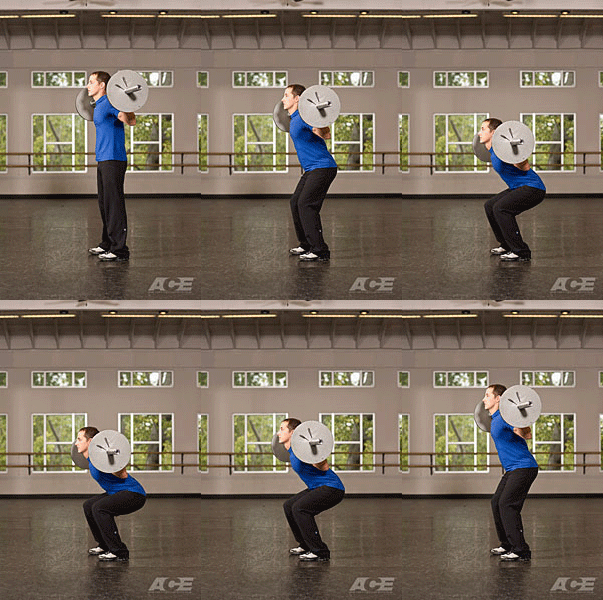
Barbell High Back Squat |

Step 1

Starting Position: Step under the bar with one foot on either side of thebarbell. Grasp the bar with palms facing down. Your hands should be slightly wider than shoulder width, and elbows fully bent. The bar should be positioned behind your head high along the top of your shoulders toward the base of your neck. Do not allow the shoulders to shrug upward. A second option for the bar position is low across the back of the shoulders. This position requires a slightly wider grip.

Step 2

Before un-racking the bar, brace your core and abdominal muscles to stabilize and protect your spine.

Step 3

Keep your chest lifted, tilt your head slightly up. Lower your body slightly to unrack the bar, then straightening your hips and knees to lift the bar.

Step 4

Take a step backward and bring your feet to shoulder-width apart, side-by-side. Your toes pointed forward or slightly outward. Shift your weight into your heels.

Step 5

Downward Phase: Begin this phase by hinging at the hips, shifting them back and down. Your hips and knees bend simultaneously. As you lower your hips the knees bend and will start to shift forward slowly. Try to prevent your knees from traveling too far forward past the toes. Keep the abdominals/core muscles engaged and try to keep your back flat (do not tuck the tail or arch the low back).

Step 6

Continue to lower yourself until your thighs are parallel or almost parallel to the floor. If your heels begin to lift off the floor or your torso begins to round, return to start position. Be aware of any movement that may occur at your feet, ankles and knees. Work to ensure that the feet do not move, the ankles do not collapse in or out and the knees remain lined up with the second toe.
Imagine pushing the floor away from you as you return to standing position.

Step 7

Lowered Position: From the front, the knees should continue to remain aligned with the second toe, the bar should remain parallel with the floor, and body weight should be evenly distributed over both feet. From the side, the shinbone and torso should be parallel with one another and the low back should appear flat or showing the beginning of some rounding.

Step 8

Upward Phase: While maintaining the position of your back, chest and head and with the abdominals engaged, exhale and return to start position by pushing your feet into the floor through your heels. The hips and torso should rise together. Keep the heels flat on the floor and knees aligned with the second toe.

Step 9

At the end of the set, step forward into a split-stance position, dip down and re-rack the bar.
Technique is very important in this lift. The tendency is to hold the shinbone too vertical which forces you to lean your torso too far forward. Using a mirror for feedback, shift your shinbone forward while keeping your heels on the floor, then bring your torso more upright, but do so from the hips and not through the low back. Squeeze your abdominals to help prevent the excess arching in the back with this correction. If using a squat rack, the safety rungs on the rack should be positioned at mid-thigh level.

readmore »
0
Dumbbell Front Squat |

Step 1

Starting Position: Stand with your feet slightly wider than hip-width, turned slightly outward. Hold a dumbbell each hand by your sides, with your palms facing inward. Pull your shoulder blades down and back.

Step 2

Engage your core and abdominal muscles ("bracing") to stabilize your spine. Curl the dumbbells to a position where they rest on the front edge of your shoulders or just in front of your shoulders. Keep your chest up lifted and your chin parallel to the ground or slightly lifted. Shift your weight into your heels.

Step 3

Downward Phase: Begin this phase by hinging at the hips, shifting them back and down. Your hips and knees bend simultaneously. As you lower your hips the knees bend and will start to shift forward slowly. Try to prevent your knees from traveling too far forward past the toes. Keep the abdominals/core muscles engaged and try to keep your back flat (do not tuck the tail or arch the low back).

Step 4

Continue to lower yourself until your thighs are parallel or almost parallel to the floor. If your heels begin to lift off the floor or your torso begins to round, return to start position. Be aware of any movement that may occur at your feet, ankles and knees. Work to ensure that the feet do not move, the ankles do not collapse in or out and the knees remain lined up with the second toe.

Step 5

Lowered Position: Keep the knees aligned with the second toe and body weight evenly distributed between the balls and heels of both feet. If you can view this from the side, your shinbone should be parallel with your torso and the low back should appear flat or may be showing the beginning of some rounding.

Step 6

Upward Phase: While maintaining the position of your back, chest and head and with the abdominals engaged, exhale and return to start position by pushing your feet into the floor through your heels. The hips and torso should rise together. Keep the heels flat on the floor and knees aligned with the second toe.
Technique is very important in this lift. The tendency is to hold the shinbone too vertical which forces you to lean your torso too far forward. Using a mirror for feedback, shift your shinbones forward while keeping your heels on the floor, then bring your torso more upright, but do so from the hips and not through the low back. Squeeze your abdominals to help prevent excess arching in the back with this correction.
readmore »
0
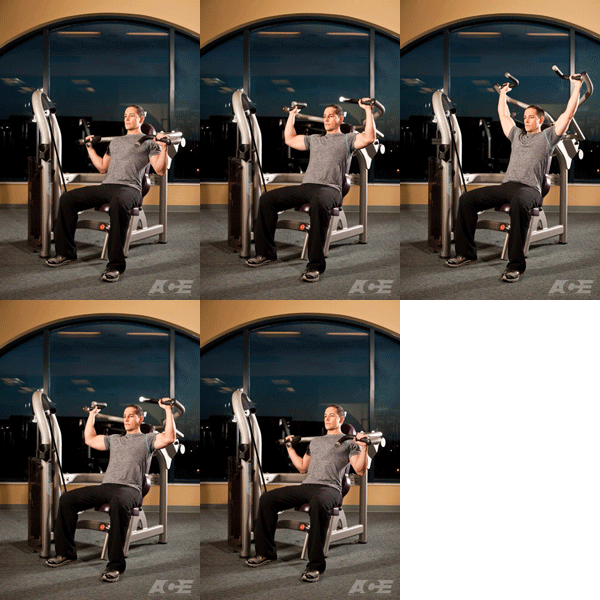
Seated Machine Shoulder Press |

Step 1

Starting Position: Sit with your back firmly supported against the backrest. Adjust the seat height so that the handles are level with your shoulders or just higher than your shoulders. Grasp the handles firmly with the thumbs clasped around the handles. Keep the wrist in line with your forearms. Position your elbows in the 4 and 8 o'clock position with the elbows aligned with the midline of your trunk. Position your feet firmly on the floor or on the footrests and brace your abdominal muscles to stabilize your body and spine. Do not press your low back into the backrest. Maintain the natural curve in your low back and avoid arching your back throughout the exercise. Pull your shoulder blades back and down. Keep these engagements throughout the exercise.

Step 2

Gently exhale and slowly press up, straightening your elbows; keeping the wrists in neutral position and head aligned with your spine. Do not allow the low back to arch.

Step 3

Continue pressing until your elbows are fully straight, but not locked. Pause briefly. Engage the muscles of your back to pull the handles back down towards your starting position. The elbows should bend in a slow, controlled manner while returning to their starting 4 and 8 o'clock position. Repeat the movement.

Step 4

Exercise Variation: To increase the exercise intensity, perform the following variations:
(a) Perform unilateral (one arm at a time) presses
(b) Sit upright off the backrest, which will require a greater effort from your core to stabilize your trunk as you perform the press movement.


In the overhead position, the shoulder is relatively unstable. To protect your shoulder it is important to engage your lats (back muscles) to initiate the downward movement as opposed to simply yielding to gravity. This will help stabilize your shoulder.
readmore »
0
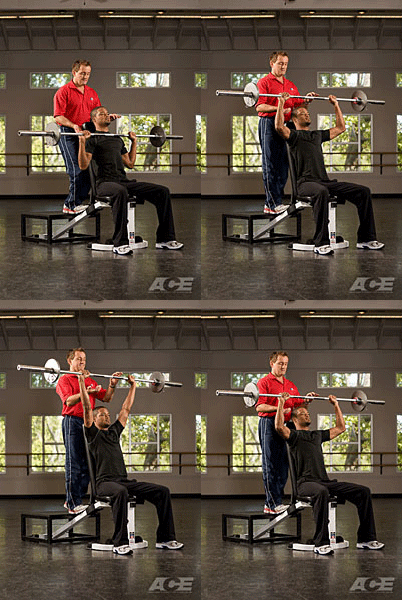
Seated Barbell Shoulder Press |

Step 1

Starting Position: Sit with your back against a backrest so that your head, shoulders and butt make contact with the pad and your feet are firmly on the floor. The bar should be positioned close to your body and level with the upper part of your chest or collarbone. Grasp the bar with the palms facing forward, thumbs wrapped around the bar. Your grip should be slightly wider than shoulder-width or at a width where your forearms are vertical to the floor. Brace your torso by contracting your core and abdominal muscles. If working with a spotter, signal for assistance.

Step 2

Upward Phase: Pull your shoulder blades down and back and hold this position throughout the exercise. If working with a spotter, have them assist you by unracking the bar from the supports. Exhale and press the bar overhead until your elbows are straight. Do not allow your low back to arch. Keep the wrists in neutral position. Do not allow bending at the wrists.

Step 3

Downward Phase: Inhale. In a slow and controlled manner, bend your elbows and lower the bar. Keep your torso rigid, wrists neutral, back in contact with the bench and feet firmly planted on the floor. Mindfully contract the muscles of your back and arms to bring the bar down. Resist yielding to gravity. Be conscious of your head position. Do not allow the bar to come in contact with your face. At the end of your set, signal your spotter for assistance in racking the bar.
Spotting is important to ensure safety in this exercise. The spotter should stand behind you in a split-stance position, positioning themselves with an elevated advantage to assist. The spotter should use an alternating grip with their hands positioned inside of yours near the bar at all times throughout the exercise.

readmore »
0
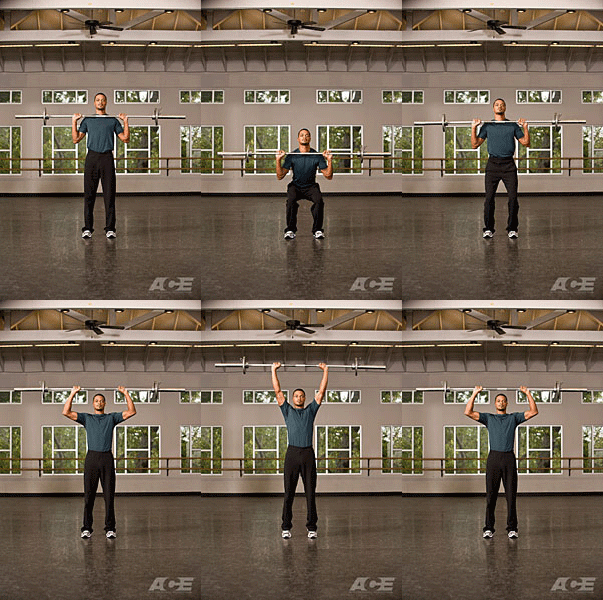
Barbell Push Press |

Step 1

Starting Position: Step under the bar in a split-stance position (one foot in front of the barbell and one foot behind your body). Grasp the bar with your hands slightly wider than shoulder width, palms facing forward. Your elbows should be bent and pointing down. Position the bar directly across the top of your chest.

Step 2

Before loading your spine by unracking the bar, brace your core and abdominal muscles to stabilize your spine.

Step 3

Keep your chest lifted and your head tilted slightly up. Dip slightly to unrack the bar, straightening your hips and knees to lift the bar.

Step 4

Take a step backward and re-position your feet to shoulder-width, side-by-side, with your toes pointed forward or slightly outward. Shift your weight over your heels.

Step 5

Downward Phase: Begin this phase by hinging at the hips, shifting them back and down. Your hips and knees bend simultaneously. As you lower your hips the knees bend and will start to shift forward slowly. Try to prevent your knees from traveling too far forward past the toes. Keep the abdominals/core muscles engaged and try to keep your back flat (do not tuck the tail or arch the low back).

Step 6

Lowered Position: Continue to lower yourself until your thighs are parallel or almost parallel to the floor. If your heels begin to lift off the floor or your torso begins to round, return to start position. Be aware of any movement that may occur at your feet, ankles and knees. Work to ensure that the feet do not move, the ankles do not collapse in or out and the knees remain lined up with the second toe.
Imagine pushing the floor away from you as you return to standing position.

Step 7

Upward Phase: From the lowered position keep your head slightly up, and quickly push through your heels, straightening the hips and knees simultaneously to bring you to an upright position.

Step 8

As the hips and knees become straight, continue the movement by rolling up onto your toes while pressing the bar overhead into full extension. You should feel this movement start at the hips, travel through the trunk and continue through the shoulders and arms. Do not allow your back to arch during the overhead push.

Step 9

Attempt to hold the fully extended position with the bar overhead briefly before returning slowly to the starting position.

Step 10

Start with light resistance then gradually progress this exercise by increasing the weight and increasing the pace of the exercise so that you begin to perform the movement explosively against heavier resistance.
Technique is very important in this lift. Do not progress to explosive movements until you master your technique.

readmore »
0
Barbell Bent-over Row |

Step 1

Starting Position: Stand with your feet slightly wider than shoulder-width, with your toes pointed forward or slightly outward. Position your feet so that the balls of your feet align under the bar.

Step 2

Squat down to grasp the bar just wider than the knees with either a knuckles forward or palms forward grip. Position the bar 1" in front of your feet.

Step 3

Prepare for the lift by keeping the spine in neutral, shoulder blades pulling down and back, chest lifted and head in line with your spine (or chin slightly raised). Your heels should be on the floor, and your shoulders over or slightly in front of the bar. Your eyes should be facing forward or slightly upward.

Step 4

Upward Phase: Before lifting, Brace your core and abdominal muscles to stabilize your spine. Lift the bar off the floor by simultaneously straightening your hips and knees to a 3/4 upright position where the barbell rests midway up your thigh with your arms straight.

Step 5

Slowly pull the bar toward your torso until it touches your abdomen. Maintain a rigid spine without any movement or change in the shape in your back. Keep both feet firmly planted on the floor while maintaining a slight bend in the knees and hips.

Step 6

Downward Phase: Slowly lower the bar back to the starting position while maintaining your back, hip, knee and foot position. Keep the shoulder blades squeezing together and the abdominal muscles engaged. Repeat.

Step 7

At the end of the set, bend the hips and knees to lower the bar to the floor.
Technique is very important in this lift. The tendency is to increase the curve in the low back during the lifting phase. Engage your abdominals to maintain a normal-to-flat spine through the entire lift.

readmore »
0
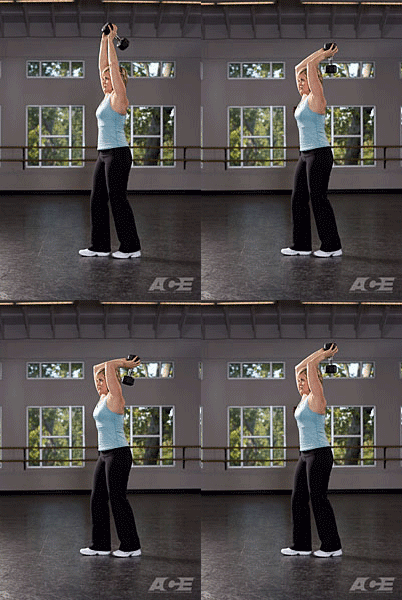
Standing Dumbbell Overhead Triceps Extension |

Step 1

Starting Position: Stand in a split-stance position holding a dumbbell with both hands wrapped around the dumbbell handle. Brace your torso by contracting your abdominal/core muscles. Pull your shoulder blades down and back. Your head and neck should be aligned with your spine.
Maintain these engagements throughout the exercise.

Step 2

Upward Phase: Exhale. Slowly press the dumbbell overhead. Straighten your elbows until your arms are vertical to the floor. You elbows are pointing forward and are straight but not locked. The dumbbell should be positioned directly over your head with your palms facing upwards and the dumbbell hanging vertically from your palms. Maintain your balance. Do not change the position of your head, torso, upper arms, wrists or feet.

Step 3

Downward Phase: Inhale. Bend your elbows in a slow and controlled manner, lowering the dumbbell behind your head. Do not allow the upper arms to move. Continue to bend the elbows to a 90 degree bend or until your upper arms begin to move backward. Do not make contact with the back of your head. Do not change the position of your head, torso, upper arms, wrists or feet. Slowly straighten the elbows and return to start position. Repeat.
Attempt to keep your upper arms vertical to the floor throughout the exercise and your elbows shoulder-width apart.
readmore »